So, a friend has recently asked me to comment on the latest video debunking Homeopathy. Watching the video, I was confronted by a number of logical fallacies, falsehoods, and even outright deceptions. So I decided to catalogue them, one by one.
1. The first problem in the video (about 2 mins into the video) is the exclusive assumption that the only possibly mechanisms for therapeutic efficacy at atomic, or molecular in nature. This is a fundamental assumption of many contemporary ideas about the nature of reality, found in modern materialism and the skeptical movement, but is not founded in the most current understanding of the sciences. Recent sciences have focused on the properties of solutes, the formation of large scale nanostructures in homeopathically prepared solutions. In short, the water and alcohol used to make homeopathic remedies is in no way the same as regular tap or distilled water not prepared this way. A summary research paper on this topic can be found here.
In a fun twist, one of the authors of that paper, a materials scientist, is fond of referring to the no atoms objection to Homeopathy as “high school chemistry”.
2. The idea of the memory of water (3 min). Many objections to the idea of a change in the properties of water having something to do with Homeopathy suggest that all water would contain an imprint of everything it ever came into contact with. This, in addition to being quite intellectually lazy, is experimentally disproven. In the research paper cited above as well as this one, a variety of experimental investigations have determine stable changes in homeopathically prepared solutions, differing from those of unprepared water.
3. The ancient allopathy fallacy (~3:20). Another objection to Homeopathy states that it’s popularity in the 19th century was due to the fact that Homeopathy was, at the least, not harmful, whereas the allopathic ( conventional) treatments of the time actively harmed the patients. This line of thinking ignored the statistics collected by Homeopaths of their work, showing mortality rates lower than would be expected from expectant treatment, and in some cases lower than those achieved with modern medicine and nursing care in the modern era. Take, for example, Pneumonia. Community acquired pneumonia has, untreated, a mortality rate of approximately 30% in the elderly, and 18% in individuals over 12 years old with competent immune systems (Kiple KF (ed.). The Cambridge World History of Human Disease. Cambridge: Cambridge University Press, 1993: 938-939.). Conventional treatment of allopathic medicine shows mortality rates ( in the present day) of about 13.7%. This rate has stayed remarkably stable historically, unlike many other infectious diseases, which wax and wane in terms of mortality. If Homeopathy was truly only not harmful, but lacked any healing power, the statistics from this time should show similar mortality rates. 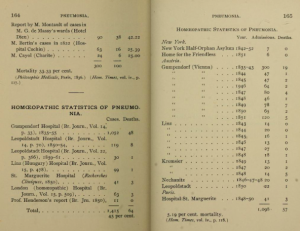
In fact they do not. Homeopathy shows consistently lower mortality rates. I have reproduced screenshot from the Homeopathic book “The logic of figures” a book compiling 19th century Homeopathic statistics. In it, a mortality rate of 5.7% of 1098 patients is reported. As well a figure from American Homeopathic hospitals ( yes, such things existed once) reported a mortality rate of 2.8% on 11 526 patients (Fiske RE. A survey of the statistics of the homeopathic treatment of lobar pneumonia. Journal of the American Institute of Homeopathy 1928; 21: 886-993.). Definitely too large to be chance, and too low to be due to non harming the patient.
4. The lifestyle objection (3:40) posits that Homeopathy has prescribed very strict lifestyle changes, which benefited the patients, and reduced the course and severity of their disease apart from the effect of Homeopathic medicines. This ignores the effect of Homeopathy on infectious disease, sampled above, in which Homeopathy acts immediately in acute situations, without the time for lifestyle changes to take effect. It also fails to explain why similar lifestyle changes prescribed by conventional physicians, with the addition of presumably efficacious medicines, failed to have an even greater effect than the lifestyle changes of Homeopaths, prescribed with presumed placebos. If lifestyle is all that is efficacious about this therapy, results such as those listed above with pneumonia should be available to any practitioner, even in the modern era, with appropriate lifestyle recommendations.
5. The modern medicine idea (4:20). The idea that western society is the longest living and healthiest society that has ever existed on the planet, and that this is exclusively due to modern western medical care, is again, categorically false. Modern Western societies life expectations are dropping (particularly in the United States). A number of historical societies enjoyed extremely long lifespans, with some having a longer life expectancy than the modern west, with no access to modern medical care. Buettner, the author of a book on the subject, reports these factors as being critical in creating these blue zones.
- family engagement
- moderate physical exercise
- purpose and meaning in life
- stress reduction
- moderate calorie diet
- largely plant derived diet
- moderate alcohol intake
- Spirituality
- active social life
I would add, that the vast majority of the increased lifespan is the work of improved sanitation and nutritional status, as well as other public health measures. A recent study described this effect, with large numbers of the public misattributing the increase in lifespan to medical care, rather than public health.
5. The idea Homeopathy has no effect beyond placebo (4:45). This stament is again categorically false. Homeopathy has been analyzed in about 8 metanalyses. Of these 6 were positive. Two were negative. Both of these were questionable methodologically and so deserve greater exploration.
The most recent and famous one, is the NHMRC report, which was recently made quite famous on the skeptical media for it’s proclamation of Homeopathy’s inability to be statistically distinguished from placebo. This conclusion however was dependent on a number of assumptions and rules added to the review process, used nowhere else in the research literature, and without justification by the authors. The authors as well made a number of methodological failures, such as inability to understand certain research designs, and failure to distinguish individualized and non individualized methodologies. As well, there was an earlier report, currently under investigation by the Ombudsman for the NHMRC, which was shelved and replaced by the current report. There is suspicion the first report was favorable to homeopathy, and the organization was outcome shopping, looking for the results they wanted and adapting their methodology to suit. A full analysis of the NHMRC reports many flaws is in the video below.
The second negative metanalysis was the 2005 Shang analysis. The absolutely massive flaws inherent to it have been discussed elsewhere on my blog, but I will give here the excellent discussion of it by the Homeopathic research institute.
6. The placebo effect (5:20). This effect has recently become something of a deus ex machina for those who debunk systems of medicine not embraced by the public health system. In short, yes it is very real. However, Homeopathy has been repeatedly demonstrated to have effects beyond that of the placebo effect, including in the highest quality trials available on the subject, as analyzed by Mathie in 2014. You can watch Mathie’s presentation on his paper below. This argument ignores the available evidence, and actually goes against it.
7. The Big Sugar argument (~6:00). The argument is that Homeopathy is a 17 billion dollar industry, engages in lobbying and thus is somehow equivalent to the pharmaceutical industry. Firstly, lets assume the 17 billion dollar argument is correct. I frankly don’t know.
The global annual revenue for pharmaceutical sales is approximately 1.1 trillion annually. This is a truly staggering amount of money, and has given rise to the pharmaceutical industry’s well known activities in lobbying, research corruption and medical education. Homeopathy in the figure given in this video (and again, I have no idea what the accuracy of this figure is) total revenues constitute approximately 1.54% of this total.
To suggest that Homeopathy is a vast and profitable business is quite simply false. While one firm (Boiron) has achieved some size, with 614 million euros in total revenue in 2016, this pales in comparison with any of the top 10 pharmaceutical companies, each of which reports tens of billions of revenue in 2016. And remember, Boiron is the leader, a very large part of the homeopathic market is dominated by smaller pharmacies operating on small budgets, making specialty products and orders with relatively low incomes and profit margins. It is a labor of love for dedicated pharmacists, not a vastly lucrative field.
To compare the efforts at systematic corruption of the Homeopathic and pharmaceutical industries is incredibly disingenuous.
8.The Homeopathy harms by omission argument. This argument has been around since Homeopathy’s earliest days, in which it was argued that Homeopathic therapeutics harmed individuals from the delay of applications of more effective therapeutics, such as bloodletting and heavy metals. This argument is based on the assumption of Homeopathy consisting solely of a placebo effect, something we have seen above, is not true, both based on clinical trials, and on our discussion of serious infectious disease like pneumonia, above.
Secondly, individuals’ consumption of holistic or alternative medicine are not correlated to less educational status, an propensity towards being deceived, or other factors. Individuals choosing holistic care tend to have higher incomes, higher educational attainments, and in my experience, higher expectations of conventional care than it is able to provide, even at the best of times. Homeopathy has traditionally be the medicine of the upper classes, and still is to a large extent in Britain. It has traditionally been favored by individuals with higher educations, and the expectation that medicine should actually cure them. Dana Ullman wrote an entire book on this subject, detailing the many famous individuals who chose Homeopathy, and why they did so. Sue Young also has a comprehensive historical blog, showing a number of leading figures, presidents, suffragettes, scientists, all individuals of discrimination and worth, who chose Homeopathy for themselves.
9. The compassion argument (6:37). A key argument against Homeopathy and it’s efficacy is the argument that our longer consultations and personal empathy fill the needs of individuals in an impersonal and sterile health systems. This is a very poor opinion of medical practitioners. I may be extremely critical of the systematic legal oppression against Homeopathy and Naturopathic medicine instituted by the current medical system, but I would not accuse medical staff of anything but the highest regard, empathy and care for their patients in the vast majority of circumstances. Furthermore, I myself have a very busy practice, with appointments running often at 10-15 minutes. Not that much long than a conventional MD’s visit length. I get stressed and overwhelmed, and can sometimes fail to connect to patients. Yet, my treatments still work, despite that failing due to economic demands.
To suggest that Homeopaths and Naturopathic doctors get better results purely to to empathy is a profound insult to the dedicated medical staff throughout the world. We get better results because of our therapies and our work in harmony with the bodies’ inherent self healing mechanisms, instead of against them, as in allopathic care.
This video piles falsehood upon falsehood, in an, admittedly, quite visually lovely piece, but one of no serious intellectual value, or any real accuracy.
Hi Everyone. I just wrote a minor editorial for The Nat Path. Here is it reproduced in full! You can access the article here.
I hope you enjoy!
Recently a post declaring that Homeopathy had been made Illegal by the FDA has been circulating on social media. Written by Dr. Mercola, the article headline “All Homeopathic Products Now Illegal?” and details recent changes being circulated by the FDA for comment. But in order to understand the changes, we must understand Homeopathic regulation in the United States.
Unlike in most countries, Homeopathics in the United States are regulated as Drugs by the FDA. This was accomplished by Royal Copeland, scion of a long line of Homeopaths, who was the Senator from New York from 1923-38. He was instrumental in the authorship of the Food, Drug and Cosmetic act, making specific provisions for the regulation of Homeopathic remedies, and making official the Homeopathic Pharmacopoeia Convention of the United States (HPCUS), begun in 1897 by the American Institute of Homeopathy. Since then, Homeopathic remedies and pharmacies have been federally regulated, in their own separate legal category.
Approval of Homeopathic drugs is now dependent on the creation of a monograph and it’s inclusion in the HPCUS. The HCPUS requires the efficacy of the remedy to be established through either clinical verification or through two double blinded trials. Substances in use prior to 1962 are also accepted, grandfathered into the current regulatory process. This process is specifically reflective of the type of knowledge generation process used in Homeopathic therapy. It is uniquely well suited among regulatory regimes to allow for approval of new remedies, and thier safe production.This process protects the public also against adulteration and misbranding of regulated products.
This approval is subject to the FDA’s nonprescription drug review, but it has not generally made this an issue.
This regime was designed for the approval of single Homeopathic remedies. These remedies generally make no health claims, being known through homeopathic clinical data, provings, and texts designed to impart this knowledge to both health practitioners and laypeople. Recently a large number of companies have began marketing complex homeopathics, products made from multiple remedies, and making health claims for them, as well as specifically marketing them to the public.
It is this making of claims and marketing that the FDA is taking issue with. as the actual press release from the FDA shows “In recent years, we’ve seen a large uptick in products labeled as homeopathic that are being marketed for a wide array of diseases and conditions, from the common cold to cancer. In many cases, people may be placing their trust and money in therapies that may bring little to no benefit in combating serious ailments, or worse – that may cause significant and even irreparable harm because the products are poorly manufactured, or contain active ingredients that aren’t adequately tested or disclosed to patients”. The FDA has stated it’s own priorities in enforcement:
- products with reported safety concerns;
- products that contain or claim to contain ingredients associated with potentially significant safety concerns;
- products for routes of administration other than oral and topical;
- products intended to be used for the prevention or treatment of serious and/or life-threatening diseases and conditions;
- products for vulnerable populations; and
- products that do not meet standards of quality, strength or purity as required under the law.
These emphases have been dictated by a few recent events and trends. A recent incident was reported in several media outlets of seizures in infants using several varieties of over the counter teething gels. These gels all contained belladonna at homeopathic ultradilutions, which should not have caused these symptoms. Some contamination of these products may have occurred, but in any case, they were recalled and similar incidents have yet to be recur. Another factor playing into this increased attention is the increasing popularity of Homeoprophylaxis. Homeoprophylaxis, the practice of using Homeopathic remedies to reduce susceptibility and severity of diseases. With increased emphasis on enforcement of vaccine mandates, options perceived as offering alternatives to vaccine mandates are coming under increased scrutiny. This has led to the suggestion the FDA may further restrict access to nosodes. Already restricted to people trained in Homeopathy by most pharmacies, the possibility remains that the FDA make further restrict these remedies.
Homeopathy is a unique system of medicine, with its own unique philosophy, treatment principles, technologies, and ideas about health and illness. The FDA has regulated the manufacture of single Homeopathics well for nearly a century. However, the proliferation of complex remedies and remedies marketed directly to the public under that legal framework raises warranted concerns whether the public is being adequately protected under the current legislation. It is entirely reasonable to demand a high standard of evidence for products making health claims, and indeed the FTC was not unjustified in taking a more stringent approach towards enforcing standards on health claims.
However, applying the same standards to Homeopathics as applies towards the approval of new pharmaceutical drugs is ludicrous. Homeopathy is incredibly safe, with events such as the teething gel incident incredibly rare. By it’s very nature it is a non toxic therapy, one capable of healing patients in desperate circumstances no other branch of medicine can help. Homeopathy, especially the manufacture of single remedies, is non proprietary. Any pharmacy can make any remedy merely by finding a sample of the original material. Homeopathic pharmacy has slim margins, and does not generate the tens of billions of profit allopathic pharmacy does. Enforcing identical standards with the approval of allopathic drugs would be both financially impossible, and extremely difficult, given the research issues inherent to Homeopathy. Furthermore, in an effort to restrict the usage of Homeoprophylaxis, restricting nosodes would deprive Americans of an extremely useful group of medicines, with enormous uses outside of Homeoprophylaxis.
The FDA does have a legitimate purpose to regulate the manufacture and the advertising of medicinal substances. In doing so, it must however ensure Homeopathy is regulated in an appropriate way. The regulation of health claims on homeopathic products marketed directly to the public, as well as their safety, may require changes to current legislation, and perhaps regulating these products in a framework similar to the regulation of dietary supplements. But the current system of regulation of single homeopathic remedies is entirely appropriate.
I would urge any Americans concerned about this process to both contact thier elected federal representative, and to participate in the FDA comment process, open to the public. Describe your experiences with Homeopathy, how it’s availability has been of great help to either your patients health, or your own, and urge them towards appropriate regulation for this incredibly safe therapy.
Hello Everyone.
I just wanted to let everyone know I wish you all a merry Christmas, Happy Holidays and to express how privileged and grateful I am to have you guys in my life as patients.
I hope we together have the best New Year, full of new discoveries, restored health for us all, and a universe transformed by our effort!
Much love!
Hi Everyone!
I just published the latest volume of the Table of Animals today! This is part Three, focusing on the Lophotrochozoa. This is a group of invertebrate animals that contains the worms (Annelids), Brachiopods, Platyhelminthes and Bryozoa. Each of these groups has never been explored systematizally within Homeopathy to date, and I am excited to bring this
The Mollusks are also included in the Lophotrochozoa. However the Homeopathic literature on the Mollusks is far more developed, requiring it’s own volume.
This work follows on my other works, The Table of Animals, and the Porifera, Cnidaria and Ctenophora. However, based on feedback I included an introduction to the Table of Animals as a whole in the book.
There will be a paperback version released, combining this volume with the future volume on Mollusks, released sometime next year. I am hopeful to release the ebook on mollusks when editing is done, sometime in January or February.
I look forward to hearing what you all think of it!
Take Care, Merry Christmas and Happy Holidays!
Turtles are generally a very poorly proven group of vertebrates. We have only 5 proven members of this species, all from the Cryptodira. Any Members of the Pleurodira would be excellent candidates for proving. 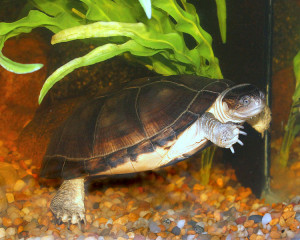 Some interesting candidates would be the African helmeted turtle (Pelomedusa subrufa) a species which has been observed engaging in mutuallist cleansing of parasites on warthogs and rhinoceros[i] shown here[ii] . Also interesting would be the mata mata turtle (Chelus fimbriata), with it’s exquisite body shape, used to camouflage itself amoung rocks and streams in South America.
In terms of the cryptodira, a multitude of fascinating species are available. Two separate, but very similar, species of giant Tortoises are extant, the Galapagos giant tortoise (Chelonoidis nigra) and the Aldabra giant tortoise (Aldabrachchelys gigantea). Both can be over 1m long, and upto 250 kg. Geographic isolation on islands. Both of these species are remarkably long lived, with some individual Aldabra giant Tortoises being recorded as living up 184 years.
Other intriguing species for proving would be the pig nosed turtle (Carettochelys insculpta) the only freshwater turtle with flippers instead of legs, and with a remarkle nose resembling that of a pig. Also interesting would be the eastern long necked turtle (Chelodina longicolis) which is remarkable for it’s long, almost snake like neck and it’s ability to secrete a foul smelling substance upto three feet when threatened.
[i] LightMatter. Online Image accessed November 26th 2017. https://en.wikipedia.org/wiki/File:Galapagos_dominance_display.jpg
[i] Owen, J. Turtles groom warthog in never-before-seen behavior. Oct 8 2015. National Geograhic. Online document accessed November 26th 2017. https://news.nationalgeographic.com/2015/10/151008-turtles-warthogs-africa-animals-science/
[ii] Photo by Greg Hume. Accessed November 26th 2017. https://en.wikipedia.org/wiki/File:Helmeted_turtle_25.JPG
Image Source: https://en.wikipedia.org/wiki/File:Helmeted_turtle_25.JPG Photo by Greg Hume.
 he Chinese softshell turtle, for my the Turtle chapter of the Table of Animals. My existing published work on the subject can be found here.
One of my earlier discoveries came to light today during a transcription of a new trituration
Hi Everyone. Homeopathy is undergoing a massive evolution in many aspects in the contemporary era.
Teaching styles of Homeopathy are part of this evolution. Immersions are a new and incredibly effective way to learn materia medica. Explaining them is difficult via text, so I made a video to explain them, with a demonstration!
I will be teaching a course on My Table of Animals using immersion methods in Toronto on Nov 4-5th 2017.. You can register by clicking here. I hope to see you all there!
Hi Everyone. So I decided to write a blog post about a recent aspect of my work. I’ve started treating a great deal of chronic infectious disease, finding it as an underlying condition for a great deal of the chronic health problems afflicting our population.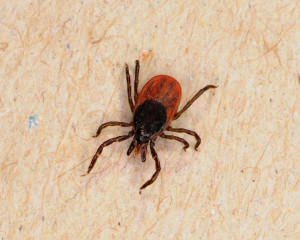
From my experience, at least in the unhealthy populations that seek me out for Naturopathic healthcare. It is present almost universally in people with autoimmune disorders, ad at very high levels in patients with mental illness, cancer, fibromyalgia, chronic fatigue, and other serious disorders.
The idea of chronic infections causing derangement of health is one that dates back to Hahnemann. The idea of Miasms, chronic infections which predispose an individual towards ill health was proposed in his great work, the Chronic diseases, and formed an integral part of Homeopathy, as it came to develop over the next two centuries.
Naturopathic medicine has known of the concepts of miasm since it’s inceptionm but this concept was submerged through the great mid century lessening of holistic medicine of all kinds. With the dawning of awareness of infections such as HIV and Lyme, it has been redisovered.
For whatever reason, humans have the capacity to retain infections within themselves long term, without manifesting signs of infection, such as fever, swelling and pain. There are long term consequences for this, with dysfunction in almost any system being maintained or caused by these infections.
Previous understandings of chronic infections have been limited by the poor nature of testing, its unrelaibility ( notorious in the case of Lyme and coinfections) and the costs of testing multiple pathogens. Recently physical exams have become available, which simply diagnosis considerably, enabling it to be preformed in office, and for no cost outside of normal visit fees. While a work in progress, these new methods allow for quick screening of everyone for these conditions.
Once diagnosed, Therapy consists of three main modalities:
- Homeopathic Nosodes- Daily administration of a nosode of the chronic infection in question aids the body in mounting an immune response to it, and fighting it off
- Hydrotherapy– One of our most powerful modalities, hydrotherapy strengthens the body’s immune response. I have not yet seen someone who has been able to clear an infection completely without hydrotherapy. It is preformed weekly, in most cases, and takes roughly one hour
- Herbal therapy- Herbs to strengthen the bodies immune response and dissolve biofilms are given to aid the body in it’s response and shorten the duration of therapy
This therapy is not easy. Signs of systematic immune responses, such as fever, muscle pain, and so forth will occur, and sometimes can be quite dramatic. Most people take 3-6 months to clear their infections, though this can take longer in some cases. But the cost is reasonable, and at the end of therapy, patients report being in better health, with many of their chronic issues resolves, or at least considerably lessened and more ameniable to normal Naturopathic treatment.
Image Credit: https://commons.wikimedia.org/wiki/File:IxodesRicinus2048.jpg
Hi Everyone. I just published my first paperback book!
This book was a compilation of my previous two e-books, which focused on the Porifera, and the Cnidaria and Ctenophora respectively.
You can buy it at this website.
I had planned to release my earlier written book “A New Era: Homeopathy and the Human Spirit” first, but unfortunately that book is still being edited. I am hopeful it will be available for purchase this fall however.
I look forward to any feedback you all have on the book. Please comment and review it!
Take care of yourselves.
Amphibians are one of the least proved classes of verberates. This is quite surprising considering the wide variety of psychoactive and bioactive peptides found in this group.
In terms of larger scale group Caecilians remain completely unproven, with no members of this group either potentised or proven. Any caecilians would be a welcome addition to the material medica. Particularily interesting would be a species of Atretochoana, a Brazilian species which is the largest tetropod that lacks lungs.
Relatively few species of Caudata have been proven as well. Interesting candidates would be the Olm, Proteus anguinus, a blind species of colorless cave dwelling salamanders found in southern Europe would be an interesting candidate. The Pleurodeles and Tylototriton genera of salamanders are remarkable in their possession of sharp ribs which can be pushed into predators and used to inject venom. This is a completely unique method of venom delivery and would make them fascinating provings. The world’s largest salamander, the Japanese giant, Andrias japonicas, would also make an excellent candidate.
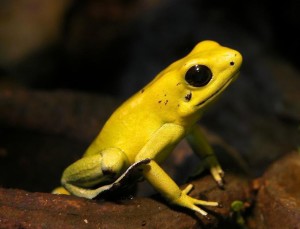
Frogs and toads have a greater number of proved specimens, but a number of fascinating species with great proving potential exist. The hallucinogenic frog, Bufo alvaris, also presents an interesting potential for Homeopathic use. More thorough proving would be excellent. Corroboree frogs (Pseudophryne species) are unique in producing their own venom, rather than deriving it from external sources. Perhaps the greatest medicinal potential lies in the Poison dart frogs of South America. Used by indigenous groups to literally poison darts and paralyze prey, the skin secretions of these frogs have powerful medicinal properties that could be very useful potentised. Two members of this group, Dendrobates auratus and Dendrobates tinctorius have been potentised already, and simply await thorough provings. Phyllobates terribilis is also an excellent candidate, with a toxic profile so distinct as to be included in this material medica. I would ask any pharmacy making remedies from these frogs to use wild specimen, capturing the full spectrum of toxicity these frogs posess in the wild. Captive specimens generally do not display toxins, and likely would not produce remedies with as profound a therapeutic effect. Pharmacies must track the source of their remedies, maintain this information, and share it when they share remedies with one another.
Image Credit: https://en.wikipedia.org/wiki/File:Schrecklicherpfeilgiftfrosch-01.jpg